
We spent a few weeks using the FF Finer Form adjustable weight bench and found it reliable for everyday home workouts. The bench felt solid under heavier sets and adjusted easily between flat, decline, and back-extension positions, which made switching exercises quick and simple.
The padding stayed comfortable through multiple sessions, and the triangular base gave us confidence during lifts. On the downside, assembly took about 30 minutes, and the bench takes decent floor space, so plan accordingly.
Bottom Line
If you want a sturdy, multi-position bench for a home gym, this one performs well for presses, hyperextensions, and sit-ups. Buy it now if you need a versatile bench that handles heavy use and saves you from buying multiple pieces of equipment.
Get to Know the FF bench
We set this bench up in our garage and put it through a week of mixed workouts. It feels solid under heavy dumbbells, and the steel frame gives a confident, stable base. The padding is firm but comfortable for presses and sit-ups, though taller users may wish for a bit more leg support during decline moves.
Adjustment is simple and quick, letting us switch angles without fuss. The assembly took about half an hour with two people. The bench handles varied exercises well, but it is fairly heavy to move and takes up some space in a small room. Overall, it’s a sturdy, versatile option for a home gym.
Versatile Workout Options
We used the bench across several routines and found it handled many moves well. It works for presses, hyperextensions, sit-ups, and core work without swapping equipment.
The adjustability made it easy to change angles mid-session, which helped us move from chest work to back and glute exercises quickly. The padding stayed comfortable during longer sets, though the narrow pad can feel tight for wider-body movements.
We liked that it replaced multiple pieces in our small home gym. Heavy lifts felt secure on the frame, but very tall users may need more leg room for some decline positions. Overall, it gives solid flexibility for full-body training.
High-Quality Construction
We felt the bench was solid right away. The alloy steel frame gave the unit a firm, stable feel during presses and hyperextensions, and the triangular base design kept it from wobbling when we moved between exercises. The padding is thick and comfortable for longer sets, though the vinyl can show sweat marks after heavy use.
The assembly took about half an hour, and the bolts fit tightly, but some holes needed a little nudging to line up. Overall, the build inspires confidence for home lifting, and the bench handled heavier moves without creaking or flexing noticeably.
User Comfort and Support
We found the bench comfortable for most moves. The padding is firm but not hard, so it supports your back during presses and extensions without sinking. Taller users may feel cramped in some positions; we noticed limited length when we tried full-range sit-ups.
The foot and leg supports hold securely, and the triangular base feels stable under load. Assembly tools and parts were included, and customer service claims quick responses — our questions were answered promptly. Overall, comfort is solid for home use, with space limits for taller people.
Simple Assembly Process
We put the bench together in about half an hour. The main frame parts lined up easily, and the hardware matched the instructions, so we didn’t struggle with confusing steps.
The included tools were basic but handy; however, a socket wrench speeds things up. Padding and adjustment pins clicked into place solidly, though aligning a couple of bolts took a bit of patience.
Overall, the assembly felt straightforward for two people. If you work alone, allow extra time to steady parts while tightening bolts.
Space-Saving Design
We fit this bench into a small home gym and found it saves room without feeling flimsy. The frame tucks against a wall, and the bench stays compact during storage, so it frees floor space for other gear.
Padding and supports don’t add bulk, but the bench still needs a clear area to use safely when you adjust it for hyperextensions or decline sit-ups. We liked that it replaces several pieces of equipment, though it won’t shrink enough for tiny closets.
Ideal for Ab and Back Training
We used this bench specifically for core and lower-back moves and found it very practical. The back extension setup gives steady support during hyperextensions, and the pad stays firm under weight.
For sit-ups and decline crunches, the angle feels natural, and the foot rollers hold steady. The cushion can get a bit thin for long sets, so we added a small mat for comfort.
Stability impressed us — the frame didn’t wobble during heavy reps. Overall, it works well as a single bench for both ab routines and back extensions without needing extra machines.
Free Workout Chart and Guidance
We found the free workout chart handy and easy to follow. It gave simple progressions for core moves like hyperextensions and decline sit-ups, which matched the bench set-up we used.
The chart points out common adjustments and beginner-safe rep ranges. It lacks advanced programming and could use clearer photos, but it’s enough to get started and avoid guesswork.
Overall, the guidance helps new users learn the bench fast. Experienced lifters may want a fuller program, but the chart saves time and reduces setup confusion.
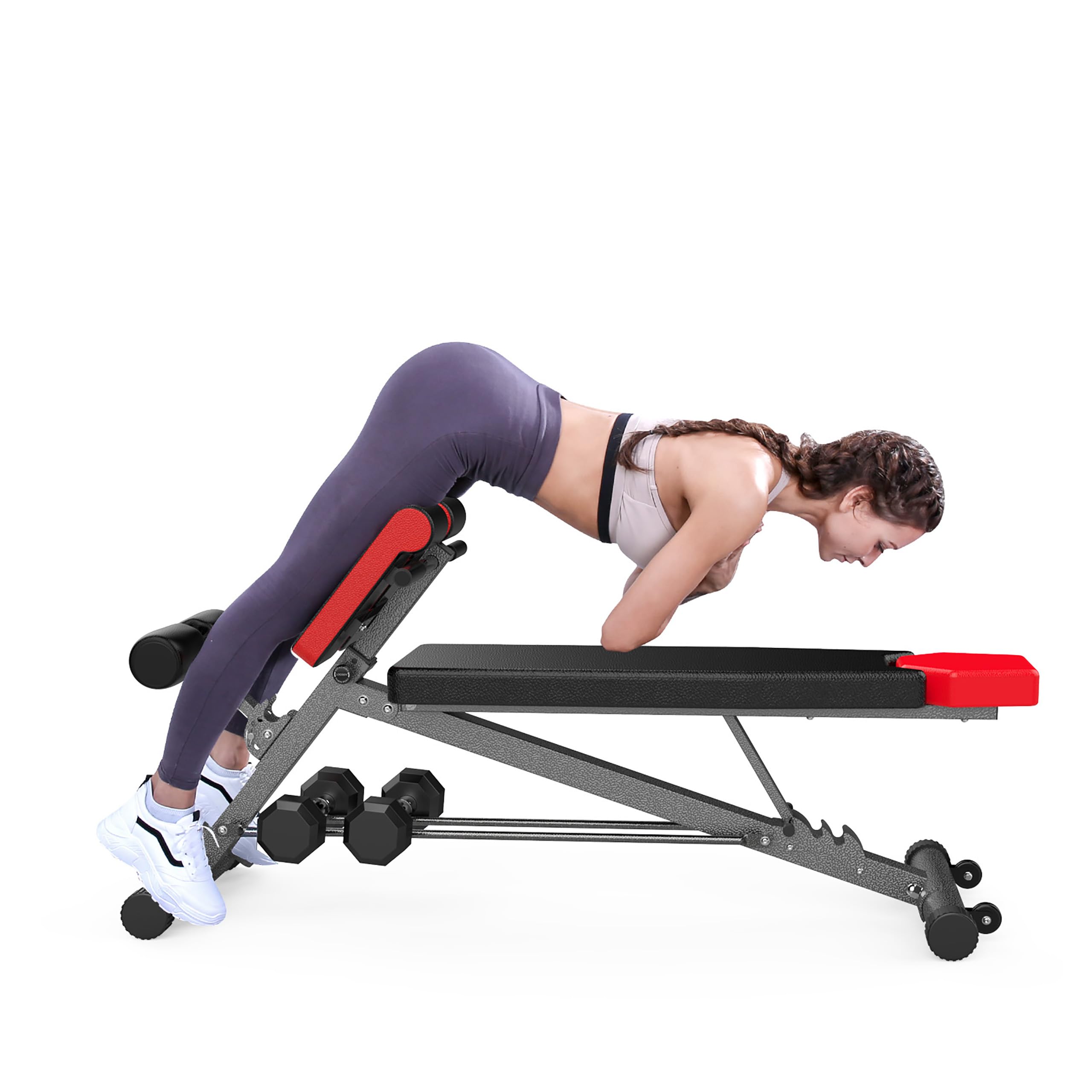
Pros and Cons
Pros
We found the bench very versatile for many exercises. It handled presses, back extensions, sit-ups, and core work without feeling flimsy. The triangular base and thick padding made longer sessions more comfortable than other budget benches we’ve used.
The assembly took about the time promised, and the included tools helped. The bench folds and stores easily, which worked well in our smaller workout space. For the price, the build felt solid and steady during typical home workouts.
Cons
The bench feels smaller for taller users. At 6'1", we noticed limited space for full body length in some positions. If you’re taller, check fit before using it for extended sets.
It’s not a commercial-grade rack. Heavy, frequent lifting may expose limits in durability compared with gym-grade steel. A few reviewers noted tight or confusing steps during setup, so expect some patience while assembling.
Customer Reviews
We used the bench for several home sessions and compared notes with other buyers. Most people praise its versatility and sturdy feel for the price. Assembly is doable with the included tools, though tightening some bolts takes time.
Users often say it folds small and saves space, which matches our experience. Taller users found the bench cramped, so consider your height. Some noted it’s not commercial-grade but works well for home routines. Overall, reviews highlight strong value, good build for the cost, and a few fit-and-assembly tradeoffs.

Conclusion
After using the bench for several weeks, we found it reliable for a wide range of home workouts. It feels solid under heavy loads, and the padding stays comfortable during longer sessions. Adjusting it between flat, decline, and hyperextension positions is easy, which helps us vary our routine without extra equipment.
The bench is not perfect: assembly takes time, and some parts need careful tightening. Still, for the price and versatility it offers, we think it’s a strong fit for anyone building a compact home gym.
Frequently Asked Questions
We used this bench for several weeks and answered the common buyer questions we saw. Our notes come from hands-on use and many customer experiences. We keep answers short and practical.
How sturdy is this weight bench under heavier loads, and what is the maximum weight capacity?
The bench feels solid in regular home use. The frame is thick steel, and the triangular base gives good stability when we press heavier dumbbells. The listed max weight is 660 pounds; in our use, it handled heavy sets without wobble. For very heavy or daily commercial lifting, a dedicated pro-grade bench is still safer.
What exercises can you do with this multi-functional bench for a full-body home workout?
We used it for presses, rows, back extensions, sit-ups, and leg work. It also supports decline and incline positions for chest and shoulder work. The bench replaces several single-use pieces, so you can cover most upper-body, core, and some lower-body moves with one unit.
How do you assemble the bench, and where can you find the manual or assembly instructions?
Assembly took us about 30–60 minutes using the included tools. Parts were labeled, and the instructions are in the box; the seller also provides a manual online on the product page. We recommend laying out all parts, following the steps in order, and taking one photo of the parts layout before opening the small bags.
Does the bench adjust to flat, incline, and decline positions, and how easy are the adjustments to use?
Yes. We moved the bench between flat, incline, and decline positions easily. The adjustment pins lock securely, and the angle changes are quick with one hand. The pads stay firm when you shift weight, though very tall users may find the back length a bit short.
What are the key differences between this bench and other popular adjustable benches for home gyms?
Compared with basic flat benches, this one adds hyperextension and Roman chair features for more core and back work. Versus premium commercial benches, it costs less and is lighter but still sturdy. Versus very cheap models, it feels more stable and better finished. The trade-offs are a slightly smaller size and fewer heavy-duty features than gym-grade benches.
What does FID mean on a weight bench, and why does it matter for home training?
FID stands for Flat, Incline, Decline. It matters because it tells you the bench can change angles to target different muscles. We found the FID design useful — it let us hit chest, shoulders, and core from multiple angles without buying extra equipment.